
The House Always Wins? Why Smart Players Still Beat the Odds
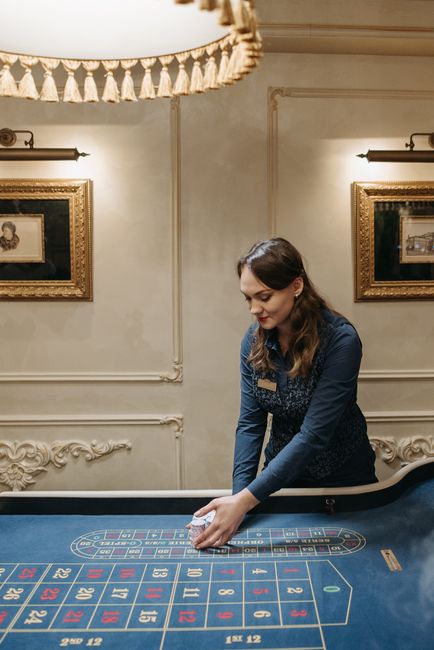
Every casino floor has a story like this: a guy in a faded baseball cap turns $50 into $4,000 on a single slot spin, and for one glorious evening he's the smartest person in the room. The rest of us know the uncomfortable truth. That moment is noise, not signal. The machine's return-to-player percentage doesn't care about your birthday, your gut feeling, or the fact you've been "due" for three hours. And yet, year after year, some players walk away ahead while most don't. The difference isn't luck. It's understanding the machinery underneath the lights.
The Math You Can't Argue With
Let's start with the house edge, because everything else in iGaming bends around it. That number is the casino's expected profit on every dollar you wager, and it varies wildly by game. Blackjack played with basic strategy sits around 0.5 percent. Baccarat's banker bet is roughly 1.06 percent. European roulette is 2.7 percent, while American roulette doubles it to 5.26 percent thanks to that extra double-zero pocket. Slots typically run between 2 and 10 percent depending on the machine and jurisdiction, and keno can creep past 25 percent. More background can be found at สล็อตเว็บตรง.
Here's why that matters in practice. If you run $1,000 through a game with a 2 percent edge, your expected loss is $20 over time. The variance around that expectation is what creates winners and losers on any given night, but the expectation itself is relentless. It doesn't have moods. It doesn't remember that you lost last Tuesday. Across ten thousand hands, the math grinds everything toward its average.
A Quick Reality Check on RTP
- RTP of 96 percent means the game returns 96 cents per dollar wagered over millions of spins, not per session
- A 96 percent RTP slot and a 97 percent RTP slot look identical after an hour but diverge sharply over a year
- Progressive jackpots often lower base-game RTP because a slice funds the prize pool
- Live dealer games usually share the same edge as their brick-and-mortar equivalents
Where Skilled Players Actually Find an Edge
Not every game is a coin flip with lipstick. Poker is the obvious outlier: you're playing against other humans, and the rake is a tax rather than a certainty of loss. A strong player at a soft table can post a long-term win rate that no blackjack or slots strategy can touch. That's why serious grinders treat poker as a skill game that happens to be hosted in a casino, not a casino game that happens to need cards.
Blackjack offers a thinner edge. Card counting works in theory — the math is settled — but modern countermeasures (frequent shuffling, six-to-eight deck shoes, continuous shuffle machines) have compressed the advantage to a fraction of a percent for all but the most disciplined operators. Advantage play in video poker is more accessible: certain pay tables on games like Jacks or Better return over 100 percent with perfect strategy, though finding those machines in 2024 is its own quest.
Sports betting sits somewhere in between. Sharp bettors exploit line movement, stale odds, and soft books that lag behind the market. The edge is real but small, usually 2 to 5 percent per bet for genuinely sharp players, and it requires bankroll discipline that most recreational bettors never develop. If you're betting with your heart on your favorite team, you're not in that group.
The Slot Machine Problem
Slots are where the largest share of casino revenue comes from, and that's not an accident. They're fast, they're simple, and the modern video slot can cycle through 500 to 1,200 spins per hour if you're playing at full speed. Compare that to blackjack at maybe 60 to 80 hands per hour. Even a modest 4 percent edge on a slot becomes devastating when you're feeding it five spins a minute.
Can you improve your slot outcomes? Only marginally, and only by choosing better games. Look for machines with published RTPs above 96 percent, avoid the flashy licensed-brand slots that often carry worse pay tables, and understand that volatility is a feature, not a bug. High-volatility slots pay less often but can pay enormously; low-volatility slots pay small amounts frequently. Neither changes the expected return, but they change the experience and your bankroll's survival curve dramatically.
Bankroll Rules That Survive Contact With Reality
- Set a session loss limit before you sit down and treat it as absolute, not negotiable
- Divide your total bankroll into at least 20 session units so one bad night doesn't end the month
- Bet 1 to 2 percent of your bankroll per hand or spin to reduce ruin risk
- Stop when you're up and the game's edge has turned against your bankroll, not against your emotions
- Log sessions honestly — most players dramatically overestimate how often they win
Bonuses, Promotions, and the Fine Print
Welcome bonuses are the most oversold product in iGaming. A 100 percent match up to $500 sounds generous until you read the wagering requirement: 35x on the bonus, slots only, maximum bet $10, 30-day expiry. That means you must wager $17,500 before withdrawing a cent of bonus money, and the expected loss on that volume often exceeds the bonus itself. Matched betting and bonus arbitrage used to make this profitable, but bookmakers have tightened terms considerably.
That said, reload bonuses, cashback offers, and free spins with low wagering can be genuinely +EV for disciplined players. The rule of thumb: calculate the expected value of the bonus before you claim it. If the wagering requirement times the house edge is larger than the bonus, you're being sold a lottery ticket with extra steps.
The Psychological Trap Nobody Escapes Easily
Casinos are engineered environments, and online casinos are engineered software. Variable ratio reinforcement — the reward schedule that makes slot machines so sticky — is the same mechanism that makes social media addictive. Near-misses (two cherries and a lemon) trigger dopamine responses similar to actual wins. Losses disguised as wins, where a spin pays $0.80 on a $1 bet but the machine celebrates, are a real and deliberate design choice.
Recognizing this doesn't make you immune, but it makes you harder to manipulate. Set a timer. Play with money you can genuinely afford to lose. Take breaks between sessions. And if you ever find yourself chasing losses, the correct move is not a bigger bet — it's a walk away from the screen.
The Honest Bottom Line
The house edge is real and permanent. No strategy, no system, and no hot streak changes the underlying expectation of most casino games. But that doesn't mean every player is doomed to lose, because the casino's edge applies to the aggregate, not to any individual session. The players who come out ahead over years are the ones who pick games with thin edges, exploit bonuses mathematically, manage their bankrolls with discipline, and treat poker and sports betting as skill contests rather than lottery tickets.
Everyone else is buying entertainment. That's fine — there's nothing wrong with paying for a night of excitement if you know that's what you're paying for. The trouble starts when you convince yourself you're beating a system that was built by people who understand probability better than you ever will. Know the math. Respect the math. Then decide whether the entertainment is worth the price.


Breathing routines, pre-concert warm-ups and mental strategies that help small ensembles perform with confidence and communicate clearly from the first downbeat.
Why slowing down reveals tuning issues, how to use drones and intervals, and ways to build reliable intonation without losing musical momentum in rehearsals.
What players should listen for during sound checks, from reverberation time to seating layout, and how to adapt balance for intimate village halls and historic rooms.
Key steps for organising local concerts, including venue booking, volunteer coordination, artistic programming and audience outreach that builds lasting support.